
Feed and Linkedin page

Understanding Welded Carbon Steel Pipes Production and Applications
Welded carbon steel pipes are essential components in various industrial applications, offering durability, cost-effectiveness, and versatility. These pipes are manufactured through different processes, including straight seam welding and hot rolling, to meet specific structural and operational demands. This article provides an in-depth exploration of welded carbon steel pipes, their types, production methods, and key industrial uses.
1. Welded Carbon Steel Pipe: An Overview
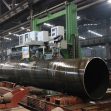
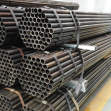
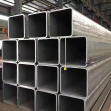
Welded carbon steel pipes are fabricated by bending and welding steel plates or coils, forming a cylindrical shape. These pipes are widely used in construction, oil and gas, water transportation, and mechanical engineering due to their high strength and affordability. Carbon steel, an alloy of iron and carbon, provides excellent weldability and structural integrity, making it a preferred material for welded pipes.
2. Steel Welded Pipe: Manufacturing Process
The production of steel welded pipes involves several key steps:
– Forming:Steel plates or coils are shaped into a cylindrical form using rollers.
– Welding: The edges are fused together using high-frequency induction welding (HFIW), submerged arc welding (SAW), or electric resistance welding (ERW).
– Sizing and Finishing: The welded pipe is calibrated to precise dimensions and may undergo heat treatment, galvanization, or coating for enhanced corrosion resistance.

3. Straight Seam Welded Steel Pipe: Features and Benefits
Straight seam welded steel pipes have a single longitudinal weld seam, making them suitable for high-pressure applications. Key advantages include:
– Uniform Strength:The straight seam ensures consistent mechanical properties along the pipe’s length.
– Cost-Effective Production:Easier to manufacture compared to spiral-welded pipes.
– Wide Applications:Used in pipelines, structural frameworks, and machinery components.
4. Hot Rolled Welded Carbon Steel Pipe: Production and Advantages
Hot rolled welded carbon steel pipes are made from steel that has been heated above its recrystallization temperature, improving ductility and formability. Benefits include:
– Enhanced Mechanical Properties:Hot rolling refines the grain structure, increasing toughness.
– Better Weldability:The uniform material composition ensures strong, reliable welds.
– Versatility:Ideal for high-temperature and high-stress environments such as boilers and heat exchangers.
5. Industrial Applications
Welded carbon steel pipes serve critical roles in:
– Oil & Gas:Transporting crude oil, natural gas, and refined products.
– Construction:Structural support in buildings and bridges.
– Water Supply:Municipal and industrial water distribution systems.
– Automotive & Machinery:Fabrication of exhaust systems and hydraulic components.
Conclusion
Welded carbon steel pipes, including straight seam and hot rolled variants, are indispensable in modern infrastructure and industrial operations. Their adaptability, strength, and cost efficiency make them a preferred choice across multiple sectors. Understanding their manufacturing processes and applications helps in selecting the right type for specific engineering needs.
By leveraging advanced welding and rolling techniques, these pipes continue to evolve, meeting the growing demands of global industries.
Tel: +86 18202256900 Email: steel@tjdpbd.com


