
Feed and Linkedin page

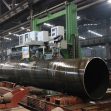
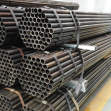
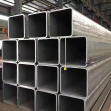
Application of Square/Rectangular Tubes, Round Tubes, and Galvanized Pipes in Steel Structure Industrial Buildings
Square/Rectangular Tubes, Round Tubes, and Galvanized Pipes are three indispensable steel sections in steel structure industrial buildings. Due to their respective physical properties, fabrication characteristics, and cost-effectiveness, they are widely utilized in different structural components, working together to create safe, economical, and efficient building systems.
Below is a detailed analysis of their applications:
1. Square/Rectangular Tubes (SHS/RHS)
Characteristics: High bending strength, excellent biaxial load-bearing capacity, regular geometry for straightforward connections and attachment of secondary elements, and a modern aesthetic.
Primary Applications:
1. Primary Load-Bearing Members:
* Columns & Stanchions: Frequently employed as perimeter columns or wind posts in portal frame structures. In multi-story framed buildings, they are a common choice for columns, particularly rectangular hollow sections (RHS), where the moments of inertia can be optimally designed in both principal axes to accommodate specific loading conditions.
* Purlins & Wall Girts: This represents the most prevalent application for SHS/RHS, especially thin-walled RHS. Serving as purlins and girts, they efficiently support roof and wall cladding systems. Their flat surface profile allows for easy and secure fastening of panels.
* Chord and Bracing Members of Trusses: In tubular truss systems, SHS/RHS are fundamental materials. They are connected via precision-cut profiles and welding to form space frames, ideal for long-span roof structures such as arenas or aircraft hangars, offering a blend of structural performance and visual appeal.
2. Secondary & Building Envelope Structures:
* Door and Window Framing: Their uniform shape is perfectly suited for manufacturing frames for industrial doors and windows.
* Beams and Columns for Mezzanine Floors, Access Platforms, and Staircases: Provide a clean finish, enhance safety, and allow for simple attachment of floor plates or treads via welding or bolting.
* Support Framework for Canopies and Projections: Acts as the primary load-bearing skeleton.
* Framing for Interior Partitions and Suspended Ceilings: Used as the supporting grid in workshops with stringent hygiene or aesthetic standards, like electronics or pharmaceutical facilities.
Advantages Summary: Efficient structural performance, simplified connections, optimal use of space, and a neat appearance.
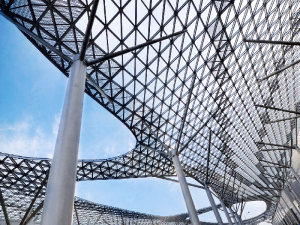
2. Round Tubes (Circular Hollow Sections – CHS)
Characteristics: Isotropic mechanical properties (equal resistance to bending in all directions), superior performance under compression and torsion, low aerodynamic drag, and favorable fluid dynamic characteristics.
Primary Applications:
1. Space Frame Structures and Compression Elements:
* Tubular Truss Networks: A core material, alongside SHS/RHS, for tubular trusses. The smooth nodal connections in CHS trusses promote excellent stress distribution and fatigue resistance, making them suitable for iconic, large-span architecture.
* Bracing Systems: Commonly found as circular hollow section bracing rods within horizontal roof/wall bracing and vertical bracing systems. Also standard for making rod-type cross-bracing.
* Platform Uprights and Load-Bearing Struts: Particularly advantageous in outdoor settings subject to significant axial loads or where minimizing wind exposure is beneficial.
2. Specialized Piping and Railings:
* Supporting Structures for Service Pipework: The framework for various plant pipelines (HVAC, dust extraction, fire suppression, process lines) is often fabricated from round tubes.
* Handrails and Guardrails: An extremely common application due to the ergonomic feel and clean lines of round sections.
Advantages Summary: Outstanding compressive and torsional strength, ideal for three-dimensional frameworks and compression members, reduced wind loading effects, and structurally efficient nodal behavior.
3. Galvanized Pipes/Tubes
Galvanization is a surface treatment process, not a base section type. It involves applying a protective zinc coating, typically via hot-dip galvanizing, to welded steel pipes (which may be circular, square, or rectangular).
Characteristics: Provides exceptional resistance to corrosion and rust, significantly enhancing durability and lifespan while minimizing maintenance needs.
Primary Applications (categorized by the base section shape):
1. Galvanized Round Tubes/Pipes:
* Fire Protection and Sprinkler Systems: Frequently mandated by building codes for these critical systems to ensure long-term, corrosion-free integrity.
* Electrical Conduits and Cable Trunking: Protects wiring infrastructure from environmental damage.
* Exterior Railings, Handrails, and Shelter Frameworks: Essential for components permanently exposed to weather to prevent rust formation.
* Low-Pressure Utility Distribution: Such as plant compressed air lines or non-potable water supply pipes.
2. Galvanized Square/Rectangular Tubes:
* Purlins and Girts: In corrosive atmospheres (marine environments, chemical processing, food/beverage plants) or for buildings demanding minimal upkeep, pre-galvanized C/Z sections or galvanized RHS are specified to avoid the cost and hassle of post-fabrication painting.
* External Structural Elements: E.g., external escape stairs, maintenance walkways, and signage supports.
* Studwork for Non-Loadbearing Walls: A standard in cleanroom and controlled environment construction.
Advantages Summary: Superior corrosion protection, extended service life, and lower whole-life costs through reduced maintenance. The initial cost is higher than untreated (black) steel, and welding requires special procedures to repair the damaged zinc coating at joints.
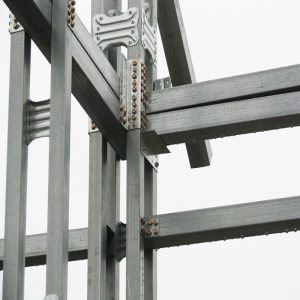
Holistic Application Scenario: A Standard Steel Structure Industrial Building
* Primary Structural Frame: Likely employs welded H-sections for main beams and columns, with SHS/RHS for secondary framing or specific wind columns.
* Building Envelope System: SHS/RHS (or roll-formed C-sections) function as roof purlins and wall girts. In coastal regions, galvanized versions of these sections would be mandatory.
* Stability System: CHS is commonly used to fabricate vertical cross-bracing and roof-level horizontal bracing.
* Ancillary Installations: Mezzanine floor structures use SHS/RHS framing; stairway handrails are made from CHS or galvanized CHS; the entire fire protection network utilizes galvanized steel pipe.
* Large Clear-Span Areas: Might feature roof structures composed of trusses fabricated from CHS or SHS/RHS.
In conclusion, contemporary design for steel structure industrial buildings involves the integrated use of these tubular products. Engineers and designers make optimal material selections and combinations based on a comprehensive analysis of structural demands, connection details, environmental exposure, architectural intent, and total cost of ownership over the project’s lifecycle.
Tel: +86 18202256900 Email: steel@tjdpbd.com


