
Feed and Linkedin page

Hot-Dip Galvanized or Zinc-Aluminum-Magnesium: Which U-Channel is Right for Your Solar Project?
In the realm of Solar Panel PV Mounting U&C Channel systems, the choice of material for the structural components is critical for long-term performance and cost-effectiveness. Two prominent options are traditional hot-dip galvanized (HDG) steel and the newer zinc-aluminum-magnesium (ZnAlMg) coated steel, both formed into U-channel sections. A comprehensive comparison of their advantages and disadvantages reveals significant differences impacting installation, durability, and lifecycle economics.
Hot-dip galvanized U-channel is a well-established solution. Its primary advantage lies in its proven track record and generally lower initial material cost. The process creates a thick, robust zinc coating that provides reliable sacrificial protection to the underlying steel. For standard environments, it offers a solid service life. However, its performance can be less optimal in more demanding conditions. The coating is susceptible to mechanical damage during handling and installation, and its corrosion resistance can diminish more quickly in coastal or industrial atmospheres with high chloride or sulfur dioxide exposure. Furthermore, the coating surface can be rougher, potentially requiring more careful sealing at connection points to prevent water ingress.
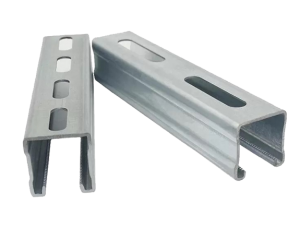
Conversely, the Zinc Aluminum Magnesium U channel represents a technological advancement in metallic coatings. The alloy composition, typically incorporating aluminum, magnesium, and zinc, creates a coating that functions through multiple mechanisms: it provides both sacrificial protection and, more importantly, forms a dense, stable barrier layer of corrosion products when exposed. This results in superior corrosion resistance, often 2 to 4 times greater than standard HDG in many atmospheres, particularly where cut-edge protection is crucial. This makes it exceptionally suitable for harsh environments. While the upfront cost is typically 10-20% higher, the extended maintenance-free lifespan offers a lower total cost of ownership.
From a practical installation and structural perspective, both types serve as the core Solar Photovoltaic Bracket element. ZnAlMg U-channels often have a smoother, more consistent appearance and better formability, reducing the risk of coating micro-cracks during fabrication. Their enhanced durability directly translates to reduced long-term inspection and maintenance needs, a significant factor for large-scale, inaccessible installations. For a standard Channel U Solar Ground Solar Rail Mount application, where the structure is exposed to soil moisture, vegetation, and fluctuating weather, the superior edge protection and self-healing properties of the ZnAlMg coating can prevent premature rust staining and structural weakening at drilled holes or section ends.
In conclusion, the choice between hot-dip galvanized and zinc-aluminum-magnesium U-channel for solar mounting structures hinges on specific project parameters. Hot-dip galvanized steel remains a cost-effective choice for projects in mild environments with stringent initial budget constraints. However, for installations prioritizing maximum longevity, resilience in corrosive environments, and minimized lifecycle costs, zinc-aluminum-magnesium coated U-channel presents a compelling and technically superior alternative, justifying its premium through extended performance and reliability.
Tel: +86 18202256900 Email: steel@tjdpbd.com


