
Feed and Linkedin page

Welded vs. Seamless Steel Pipe: Choosing the Right Conduit for Industry
The choice between a welded or a seamless steel pipe is a fundamental engineering decision, often hidden from the final product but critical to its performance and cost. Both serve as essential conduits for fluids, gases, and structural support, yet their distinct manufacturing journeys lead to unique strengths and ideal applications. Understanding their common ground and their points of divergence is key to specifying the right material for the job.
At their core, both types share a universal mission: to safely and efficiently convey or support. They are ubiquitous in infrastructure—carrying water, oil, and gas, forming scaffolding, and acting as mechanical components. Whether welded or seamless, the pipe must withstand internal pressure, external loads, and environmental factors. The common denominator is reliability. For numerous general-purpose applications, where pressures and stresses are moderate, welded steel pipes, particularly the common ERW carbon steel pipe (Electric Resistance Welded), offer a superb and cost-effective solution. You’ll find them extensively in water distribution, fencing, and low-to-medium pressure plumbing. Their production process, which involves forming and welding sheet metal, allows for large diameters and thinner walls at a significantly lower cost, making them the workhorse for high-volume, non-critical projects.
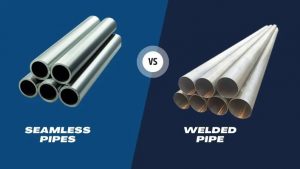
The critical distinction lies in their creation. A seamless steel pipe is born from a solid billet of steel, pierced and rolled into a hollow shape with no seam. This monolithic construction is its greatest asset, providing uniform strength and grain structure around its entire circumference. This makes it inherently superior for extreme conditions: high internal pressure, high temperatures, corrosive environments, or heavy torsional stresses. It is the undisputed choice for critical service in refineries, high-pressure steam lines, hydraulic cylinders, and offshore oil and gas exploration. The absence of a weld seam eliminates a potential point of failure, a non-negotiable requirement in such demanding settings.
Conversely, the very seam that defines a welded pipe can be a potential vulnerability, though modern welding techniques like ERW have vastly improved integrity. The welding process can create minor inconsistencies in the heat-affected zone. Therefore, while seamless pipes excel in high-stress, high-reliability domains, welded pipes dominate where economy and availability in larger sizes are paramount. The choice ultimately hinges on a balance of pressure requirements, environmental conditions, budget, and safety factors.
In practice, the industries often make a clear distinction. For structural frameworks, low-pressure conveyance, and general construction, the affordability and versatility of welded pipes make them the default. When the stakes involve high pressure, volatile contents, or dynamic loads, the seamless variant, with its guaranteed homogeneity, becomes the necessary investment. It’s not a matter of one being universally better, but of aligning the pipe’s inherent character—forged from a single piece or skillfully united along a seam—with the specific demands of the task it must perform for years to come.
Tel: +86 18202256900 Email: steel@tjdpbd.com


