
Feed and Linkedin page

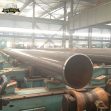
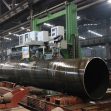
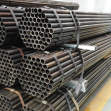
How to Remove the Inner Weld Ribs in Straight Seam Welded Pipes
Ensuring Smooth Flow and Superior Performance in Critical Applications
In the world of industrial piping, the integrity of the inner surface is just as critical as the external strength. For straight seam steel pipe products, a common post-weld challenge is the presence of internal weld ribs, also known as weld beads or reinforcement. These are the excess material that protrudes on the inner surface of the pipe after the welding process. While a small, controlled reinforcement is sometimes acceptable, excessive inner weld ribs can restrict fluid flow, cause turbulence, trap contaminants, and ultimately compromise the pipeline’s efficiency and longevity. Addressing this issue is therefore a vital step in the manufacturing process for high-specification applications.
The formation of an internal weld rib is inherent to the manufacturing process of many welded steel pipes. This is particularly true for the widely used ERW steel pipe (Electric Resistance Welded), where the heat and pressure used to forge the seam cause material to displace inwards. Similar challenges can be found in other fusion welding processes used for creating a round steel pipe. For applications involving the transport of fluids, slurries, or gases where smooth laminar flow is essential, or for projects requiring the insertion of equipment through the pipe, these internal protrusions are unacceptable.
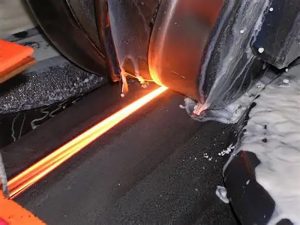
So, how does the industry tackle this challenge? Several specialized methods have been developed to remove inner weld ribs effectively, each with its own advantages and suitable contexts.
The most common and efficient method for modern production lines is internal weld bead shaving. This process uses a specialized tool, essentially a precision cutting head, that is fed through the newly welded straight seam steel pipe. As the tool travels along the pipe’s length, it mechanically cuts or mills away the excess weld material, leaving behind a smooth, uniform inner surface. This technique is highly automated, ensures consistent results, and is ideal for high-volume manufacturing.
For situations where shaving is not feasible, such as for pipes already in service or for on-site fabrication, grinding and abrasion techniques are employed. This involves using pneumatic or electric grinders with long-reach attachments to reach the internal weld seam. An operator carefully grinds down the rib until it is flush with the inner wall. While effective, this method is more labor-intensive and requires a highly skilled operator to avoid damaging the base material or creating uneven spots.
A more advanced, non-contact method is laser ablation. This technology uses a high-power laser beam to precisely vaporize the excess weld metal. A laser head is traversed through the interior of the ERW steel pipe or other welded types, and it meticulously removes the rib without any physical contact. This process offers exceptional precision, minimizes the heat-affected zone, and is perfect for high-value, thin-walled pipes where mechanical stress must be avoided.
The choice of removal method depends on factors like the pipe diameter, wall thickness, production volume, and the required final surface finish. By investing in the removal of inner weld ribs, manufacturers significantly enhance the performance of their welded steel pipes. This leads to reduced pressure drop in fluid systems, prevention of corrosion initiation sites, and improved cleanliness, making the finished round steel pipe product suitable for demanding sectors like oil and gas, chemical processing, and high-purity water lines. In conclusion, the internal finishing of a straight seam steel pipe is not a minor detail but a decisive factor in its operational success.
Tel: +86 18202256900 Email: steel@tjdpbd.com


