
Feed and Linkedin page

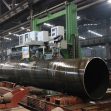
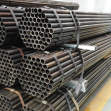
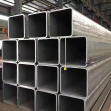
How Seamless Square and Rectangular Tubes Are Made
When you look at modern construction sites or industrial facilities, you’ll notice something interesting – those clean-lined square and rectangular steel tubes supporting structures aren’t just ordinary pipes. They represent some of the most sophisticated manufacturing in the steel industry today. Let me walk you through how these engineering marvels come to life.
The Foundation: Understanding Seamless Carbon Steel Hollow Sections
What makes these components special starts with their basic form. Seamless carbon steel hollow sections begin their journey as something completely different – solid cylindrical billets of high-quality steel. Unlike welded tubes that start as flat strips and get joined along a seam, seamless tubes maintain their structural integrity by being formed from a single piece of material. This absence of welding gives them superior strength characteristics, making them perfect for applications where failure isn’t an option – think high-pressure hydraulic systems, offshore platforms, and critical structural supports.
The Transformation Process
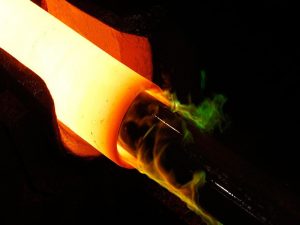
The real magic happens in the initial forming stage. Workers heat the solid steel billet until it’s glowing orange, then feed it through specialized piercing equipment. The most common method uses the Mannesmann process, where angled rollers create internal stresses that literally tear a hole through the center of the rotating billet. It’s like pushing a heated metal rod through clay – the material displaces rather than cuts away, forming a thick-walled hollow shell ready for further processing.
Shaping the Future: From Round to Rectangular
Here’s where things get particularly interesting. After the initial piercing and elongation processes that create seamless round tubes, manufacturers face the challenge of transforming these circular profiles into square and rectangular shapes. Creating seamless square tube configurations requires specialized hot-forming techniques that maintain the material’s seamless characteristics while achieving precise geometric shapes.
The process resembles pushing play-dough through a shaped cutter, but at industrial scale and precision. Manufacturers reheat the round seamless tubes and force them through progressively shaped dies – typically arranged in what’s called a “turks-head” configuration. These dies gradually reshape the circular cross-section into perfect squares and rectangles, ensuring uniform material distribution and proper corner filling. The result is what industry professionals call hot formed square and rectangular hollow section products that combine the best of both worlds: seamless construction with optimized structural shapes.
Finishing Touches and Quality Assurance
The manufacturing journey doesn’t end with shaping. The newly formed tubes undergo controlled cooling to normalize their internal structure, followed by straightening to achieve perfect geometry. Surface treatment comes next – whether it’s pickling to remove scale, phosphating for corrosion resistance, or custom painting for specific applications.
What really sets these products apart is the rigorous quality control. Every batch undergoes multiple checks – visual inspection, dimensional verification, and advanced non-destructive testing methods. Ultrasonic testing detects internal flaws, while eddy current testing checks surface integrity. This comprehensive approach ensures each tube meets strict international standards for applications where reliability matters most.
Why This Manufacturing Approach Matters
The complex process of creating seamless square and rectangular tubes represents more than just technical achievement – it demonstrates how modern manufacturing meets evolving engineering needs. By maintaining seamless construction through the entire forming process, these products deliver unmatched reliability for critical applications across multiple industries. From construction and infrastructure to mechanical systems and specialized equipment, these components form the invisible backbone supporting modern industrial progress.
Tel: +86 18202256900 Email: steel@tjdpbd.com


