
Feed and Linkedin page

The Geometry of Strength: Weighing the Use of Square and Round Steel Tubes in Construction
From the skeletal frames of skyscrapers to the intricate supports of a pedestrian bridge, the choice of steel tubing is a foundational decision in construction. It’s a quiet dialogue between form and function, where geometry dictates not just shape, but performance, cost, and speed. A common question arises: which sees greater volume in the industry—Square And Rectangular Pipe or its counterpart, the Steel Round Pipe? The answer isn’t a simple declaration, but an exploration of a nuanced partnership where each excels in its own domain.
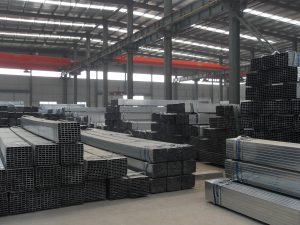
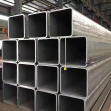
Walk onto any major construction site. Your eyes are immediately drawn to the rectilinear grid of beams and columns. This is the natural habitat of Square And Rectangular Pipe. Their primary advantage is starkly practical: those flat surfaces. They offer unparalleled ease of connection. Bolting or welding to other flat plates, brackets, or even other tubes is a straightforward, forgiving process. This geometric compatibility with our built world—a world of right angles—translates directly into faster fabrication and erection. There’s less need for complex notching or custom fittings; the sections simply line up. This efficiency is a powerful driver for their dominance in structural framing for buildings, mezzanines, and load-bearing columns. Now, add a layer of durability for exposed applications. This is where Galvanized Square Steel Pipe becomes ubiquitous. That zinc coating fights corrosion relentlessly, making it the default choice for outdoor structures: highway sign gantries, fencing, industrial handrails, and exposed architectural elements. Its combination of connectability and resilience makes it a colossal volume leader in visible, everyday structures.
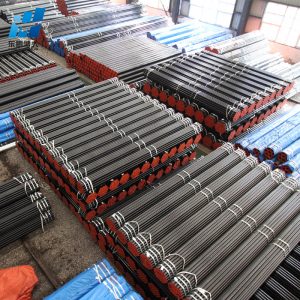
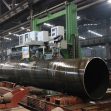
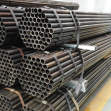
Does this relegate the round tube to a niche role? Far from it. The Steel Round Pipe thrives where its inherent properties are paramount. Its cylindrical shape provides uniform strength in all directions and superior resistance to torsional and bending forces. Think of a utility pole resisting the wind; its circular cross-section is inherently optimal. Its smooth bore also makes it the undisputed champion for conveying fluids and gases. A specific and critical variant here is Welded Carbon Steel Round Pipe. Its robust seam and reliable strength make it a backbone for plumbing, HVAC systems, fire suppression lines, and as piling in foundational work. In applications where structural loads are more about axial compression or where a sleek, continuous profile is desired—like in architectural handrails or certain space-frame designs—the round tube is often the more elegant and structurally efficient solution.
So, where does the volume balance tip? Quantitatively, in terms of sheer tonnage used in building construction for framing and primary supports, the square and rectangular family likely holds a significant edge. The reason is rooted in the economics of assembly and the rectilinear nature of most buildings. The time and cost savings from easier connections are simply too substantial to ignore on a large scale. However, this isn’t a victory but a division of labor.
Perhaps a better way to view it is through the lens of application. For creating the bones—the rigid, connective framework of our built environment—the Square And Rectangular Pipe is the unambiguous workhorse. For the veins and tendons—the fluid transport systems and specialized structural roles requiring isotropic strength—the Steel Round Pipe and its Welded Carbon Steel sibling are irreplaceable. One shapes the boxes we inhabit; the other services them and handles forces in the round. Together, they form the complete, interdependent skeleton upon which modern construction confidently rises.
Tel: +86 18202256900 Email: steel@tjdpbd.com


